
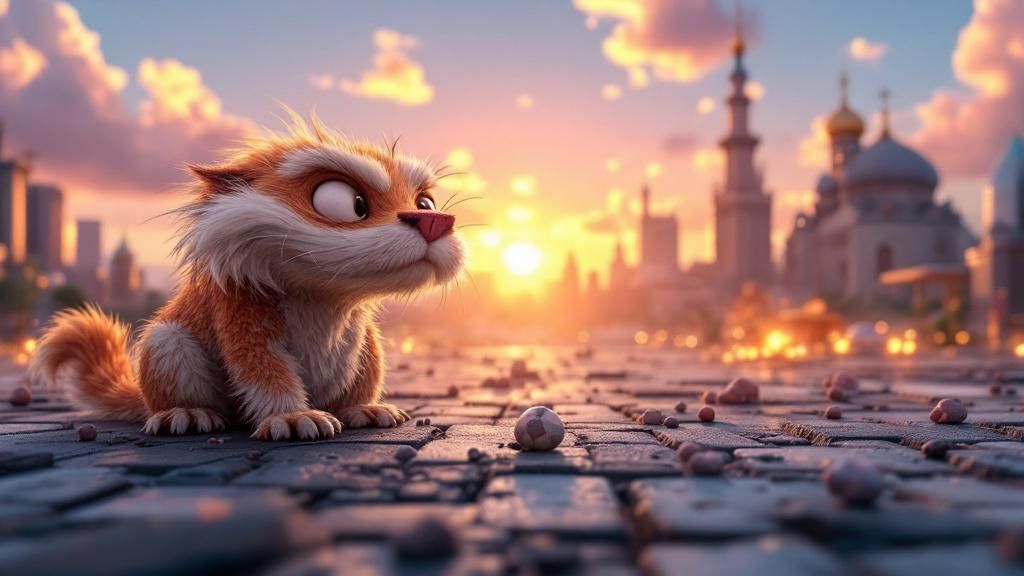
The animation industry is undergoing a significant transformation as studios leverage cutting-edge visual effects technology to redefine what’s possible on screen. From artificial intelligence-driven character animation to dynamic rendering engines, these innovations are transforming creative workflows and enabling artists to achieve increasingly ambitious visions. This article investigates how prominent animation houses are utilising these innovative tools to expand artistic boundaries, strengthen storytelling capabilities, and deliver visually compelling experiences that captivate audiences worldwide.
Innovative Processing Approaches Transform Online Narratives
The animation industry is undergoing a significant shift as studios embrace cutting-edge rendering technologies that fundamentally alter how digital narratives are created and delivered. These innovative techniques allow creators to achieve unprecedented levels of visual quality and authenticity, reshaping the landscape of digital storytelling. By leveraging advanced computational techniques, animators can now generate imagery that matches live-action cinematography, whilst preserving the creative flexibility that defines animation as an creative discipline.
Contemporary visual innovations have made accessible access to professional-quality visual effects, allowing smaller studios to compete alongside industry giants. The availability of these tools has sparked a creative renaissance, encouraging exploration and creative boldness across the sector. Studios are discovering novel ways to blend classic animation techniques with advanced digital tools, resulting in distinctive visual styles that captivate audiences and expand the possibilities of what animation can achieve in modern media.
Instantaneous Ray Tracing Progress
Ray tracing in real-time marks a pivotal turning point in digital rendering, enabling animators to visualise complex lighting scenarios instantaneously rather than waiting for extended render periods. This technological advancement has dramatically accelerated production workflows, enabling artists to make creative decisions with instant on-screen results. The ability to see production-ready illumination in real-time fundamentally changes how animators approach their craft, fostering greater artistic control and enabling increasingly sophisticated visual storytelling.
The ramifications of real-time ray tracing go further than mere technical efficiency, substantially transforming the creative workflow itself. Studios can now work quickly on visual ideas, testing lighting arrangements and environmental atmospherics that would previously necessitated considerable processing time. This instant capability has enabled creative professionals to explore more ambitious storytelling techniques, resulting in visually refined stories that extend the limits of what viewers anticipate from animated material.
- Photorealistic lighting calculations process in real-time for immediate feedback
- Complex shadow interactions create unprecedented depth and spatial authenticity
- Advanced lighting algorithms produce naturally lit environments without compromise
- Reflective surfaces display accurate light behaviour across diverse material types
- Atmospheric effects integrate seamlessly with ray-tracing lighting technology
Artificial Intelligence Implementation in Animated Content Creation
Artificial intelligence has established itself as a groundbreaking force within creative studios, fundamentally reshaping how creative teams approach character creation, motion tracking, and narrative visualisation. By streamlining repetitive workflows and providing intelligent suggestions for artistic improvement, AI technologies empower animators to concentrate on complex creative decisions whilst machines manage routine technical work. This collaborative partnership between human creativity and machine intelligence has accelerated production timelines significantly, allowing studios to produce complex projects in a more streamlined manner without compromising artistic standards or visual precision.
The integration of AI into animated production processes has democratised access to complex visual effects technologies, empowering smaller studios to rival major industry players. Machine learning algorithms examine extensive repositories of previous animated content, identifying patterns and optimising rendering processes in methods previously unachievable through human effort exclusively. Additionally, intelligent software solutions facilitate simultaneous cooperation between international teams, removing location constraints and promoting a broader collaborative space. As such innovations continue evolving, their capacity to reveal new creative opportunities becomes progressively clear.
AI Technology for Character Creation
Machine learning algorithms have revolutionised character development processes by assessing emotional nuances and physical movements with exceptional precision. These systems can generate realistic facial expressions, body language, and gestural patterns based on large-scale training datasets, dramatically reducing the time required for frame-by-frame animation. Animators employ these intelligent systems to establish baseline character movements, which they afterwards refine and customise, combining algorithmic efficiency with human creative judgment. This collaborative approach produces characters that feel truly lifelike whilst maintaining the particular artistic style individual studios seek.
The use of artificial intelligence reaches past basic motion creation, including personality development and consistent characterisation across extended narratives. Complex algorithms analyse screenplay material and character backgrounds, recommending character behaviours and emotional reactions that correspond to existing character development. This technical support ensures narrative coherence whilst enabling animation teams to investigate creative variations and unconventional methods. Production companies document significant gains in character believability and emotional audience response, showing that technology and artistry can truly strengthen each other.
- Predictive algorithms predict character movements from limited data inputs
- Deep learning systems generate lifelike facial features conveying emotional states
- Machine learning systems ensure consistent character behaviour across productions
- Automation tools reduce manual animation labour by approximately 60%
- AI tools facilitate rapid iteration and creative experimentation during development stages
Mocap Technology Achieves New Levels
Motion capture technology has undergone a significant revolution in the past few years, reshaping how animators bring characters to life. Contemporary systems now provide unmatched precision and instant processing abilities, enabling studios to record detailed acting with remarkable precision. These advancements enable creators to convert movement data into animated figures with impressive accuracy, preserving the subtleties that create emotionally engaging acting and authentically compelling.
The merger of artificial intelligence with motion capture workflows has greatly advanced creative possibilities. Studios can now process vast amounts of performance data in real time, enabling continuous improvement and experimentation at remarkable pace. This technological collaboration has democratised high-quality motion capture, making complex animation approaches accessible to studios of diverse capacities and funding levels, ultimately enriching the diversity of animated content available to audiences.
Spatial Capture Methods
Volumetric capture represents a fundamental change in how three-dimensional performance data is gathered and deployed. Unlike marker-based technology, volumetric capture records complete scenes and performances as three-dimensional point clouds, enabling unprecedented creative flexibility. This approach permits creative teams to reposition cameras, modify lighting conditions, and navigate spaces from any conceivable angle, fundamentally changing post-production pipelines and creative choices.
The implementations of volumetric capture extend far beyond conventional animated characters. Studios are utilising this technology to document sophisticated interactions between multiple performers, environmental changes, and intricate physical phenomena. The resulting captured material furnishes animators with extensive spatial detail, enabling them to create more realistic interactions and sophisticated visual narratives that would be considerably more challenging using standard motion capture approaches.
- Live volumetric playback enables instant creative input and iteration
- Multiple camera setups document movement from many concurrent angles
- 3D point cloud information enables flexible camera positioning in post-production phases
- Combination with virtual production systems simplifies collaborative workflows significantly
- Greater positional precision enhances character interaction and environmental realism markedly
Industry Collaboration and Future Prospects
The animation sector finds itself at a pivotal moment where cooperative efforts between production houses, technology partners, and creative bodies is transforming the terrain of visual storytelling. As cutting-edge VFX technology becomes increasingly sophisticated, studios acknowledge that collective knowledge-sharing and cooperative innovation propel progress across the sector. This shared methodology fosters an context where innovations advantage the whole sector, improving quality and enabling independent producers to obtain tools previously reserved for major production companies.
Looking ahead, the convergence of AI technology, cloud computing, and immediate visual processing presents significant potential for animation production. Industry leaders forecast that continued investment in cooperative research ventures will broaden availability to premium visual effects technology. The future landscape projects a better connected ecosystem where companies both large and small gain from and add to technological advancements, in the end enriching the artistic opportunities open to directors and spectators alike.
Multi-Studio Creative Partnerships
Strategic alliances between animation studios constitute a significant change in how the industry addresses tech advancement and creative excellence. By pooling resources and expertise, studios tackle complex technical challenges with greater efficiency whilst sharing the significant financial weight of R&D. These partnerships extend beyond simple resource pooling, fostering authentic knowledge sharing that elevates the entire sector’s capabilities and promotes bold experimentation with emerging technologies.
Well-executed collaborative ventures across studios show that competitive rivalry and teamwork can coexist harmoniously across the animated content industry. Joint development initiatives, industry standards committees, and collaborative research initiatives create frameworks where studios maintain their market advantage whilst enhancing shared technical expertise. This approach demonstrate significant value for creating open-source solutions and defining sector standards that benefit professionals working at every production level and specialism.
- Shared research initiatives accelerate technological advancement and innovation
- Joint funding approaches reduce studio financial strain significantly
- Joint development projects create industry standards and best practices
- Information exchange communities reinforce creative communities and professional relationships
- Open-access tool creation widens availability of high-end visual effects
