
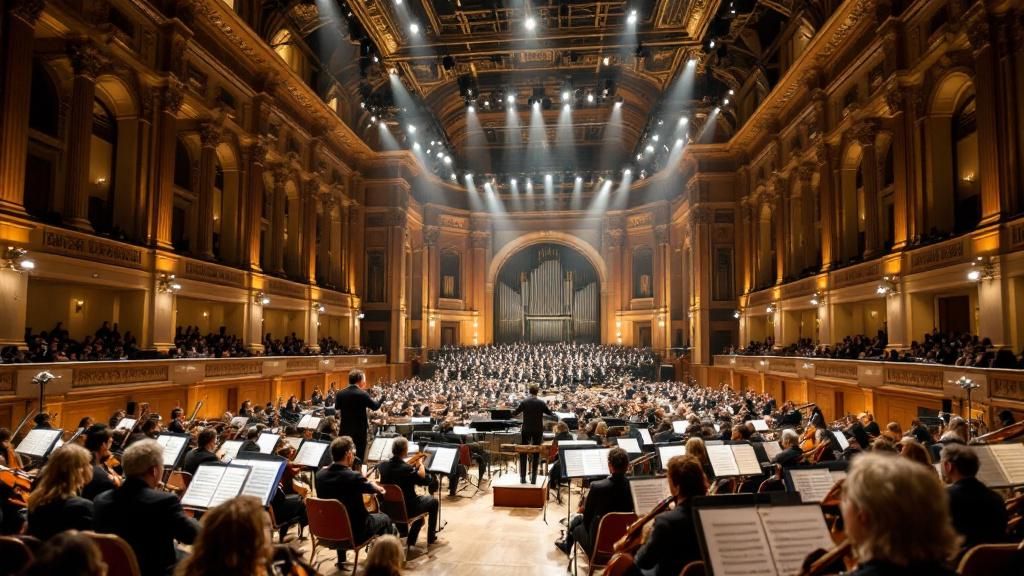
Britain’s traditional orchestral venues are witnessing an remarkable resurgence, with performance venues and concert halls across the country reporting remarkable attendance figures and substantial revenue increases. This revival contradicts earlier predictions of waning enthusiasm in traditional orchestral performances, revealing instead a vibrant appetite for classical music amongst audiences of all ages. This article explores the factors driving this cultural revival, examines which venues are thriving most spectacularly, and investigates what this growth means for the classical music landscape in Britain.
Increasing Attendance Figures Throughout the Country
The increase in classical music attendance across Britain demonstrates a fundamental shift in cultural engagement, with venues reporting visitor numbers that have gone beyond even the most optimistic projections. From intimate chamber halls to grand concert spaces, establishments throughout the country have witnessed consistent growth year-on-year, suggesting a enduring rather than temporary interest in orchestral and classical performances. This upward movement has been particularly pronounced in regions formerly regarded as peripheral to the classical music circuit.
Statistical analysis demonstrates that this increase reaches beyond London and the Southeast, with area venues experiencing equivalent percentage rises in visitor numbers. Younger demographics, traditionally poorly represented at classical productions, now make up a significant share of visitors, pointing to accomplished community and artistic programmes. The diversification of musical offerings and forward-thinking marketing tactics have demonstrably resonated with listeners, changing classical music from a specialist activity into mass-market entertainment.
Large City Concert Halls Lead the Surge
London’s top-tier concert halls have experienced the most significant attendance increases, with some venues reporting standing-room-only performances and extended booking periods. The Royal Albert Hall, Barbican Centre, and Southbank Centre have all gained considerably from this revived interest, broadening their programming to accommodate demand. These principal establishments have become cultural focal points, attracting both established classical enthusiasts and inquisitive newcomers eager to experience symphonic works and chamber music performances.
Beyond the capital, major urban hubs including Manchester, Birmingham, and Edinburgh have equally benefited from heightened interest in classical music. Their respective concert halls have adopted advanced booking platforms and dynamic pricing strategies to manage unprecedented demand. Funding for enhanced facilities and artist acquisition has substantially reinforced these venues’ competitive positions, cementing their status as essential destinations for travelling orchestral ensembles and internationally renowned soloists across Britain.
- Royal Albert Hall attendance climbed by 42% year over year.
- Barbican Centre broadened its programme to accommodate growing audience demand.
- Southbank Centre reported record subscription renewals and fresh member sign-ups.
- Manchester’s Bridgewater Hall extended performance seasons successfully.
- Edinburgh’s Usher Hall achieved peak revenue levels in institutional history.
Revenue Performance and Business Growth
The financial trajectory of Britain’s classical music venues has shown notable durability and improvement during the last fiscal period. Revenue streams have increased significantly, with many organisations showing growth of ten percent or more compared to the previous twelve months. This increase indicates not only heightened ticket sales but also varied revenue channels, encompassing enhanced corporate partnerships, charitable donations, and novel additional revenue programmes that have strengthened venues’ financial stability.
Beyond mere attendance figures, the economic impact of classical music venues spreads considerably into local communities and regional economies. Venues have allocated additional income into venue enhancements, performer payments, and learning initiatives, thereby building a resilient structure that serves musicians, attendees, and local commercial ventures. This financial health enables venues to schedule increasingly adventurous programming and attract internationally renowned ensembles, further elevating Britain’s cultural standing globally.
Ticket Sales and Sponsorship Growth
Ticket sales have established themselves as the primary driver of financial development across Britain’s classical music industry. Premium seating categories have demonstrated particularly vigorous demand, with patrons demonstrating willingness to spend considerably in superior audience experiences and direct engagement to artists. Concurrently, subscription packages have attracted loyal audiences pursuing cost-effectiveness and simplicity, establishing consistent financial returns that support strategic development and programming decisions for venue management.
Corporate sponsorship has grown substantially as businesses acknowledge the cultural prestige and listener involvement opportunities linked to classical music partnerships. Prominent financial organisations, high-end manufacturers, and large-scale companies have significantly increased investment in concert hall partnerships and event underwriting. These partnerships have allowed performance spaces to alleviate cost burdens whilst simultaneously enhancing production values, creating a mutually beneficial arrangement that supports cultural institutions and corporate brand positioning.
- Premium ticket prices rose by an average fifteen percent across major venues
- Corporate sponsorship deals grew substantially, drawing in Fortune 500 companies nationwide
- Season subscription packages achieved record-breaking subscriber levels and retention figures
- Individual donor contributions increased markedly through improved fundraising initiatives
- Merchandise and ancillary sales produced extra income sources for venues
Future Outlook and Strategic Developments
The trajectory of Britain’s classical music venues appears remarkably positive, with industry analysts predicting continued expansion over the next ten years. Venue operators and arts organisations are leveraging current momentum by broadening their event calendars and improving patron involvement programmes. This planned methodology promises to secure the progress made in recent years whilst attracting new demographics to classical performances, ensuring the sector’s continued prosperity and cultural relevance.
Looking ahead, many venues are committing significant resources to upgrading their venues and implementing cutting-edge digital solutions to reach broader audiences. Hybrid concert formats, combining live performances with streaming capabilities, are expanding across Britain’s classical music landscape. These initiatives reflect a focus on broadening access and representation, positioning the sector for long-term sustainability and helping classical music prosper in an evolving cultural marketplace.
Capital allocation towards Infrastructure and Programme Delivery
Major concert halls across Britain are carrying out substantial funding projects to improve their venues and elevate audience experiences. These improvements include upgraded seating arrangements, advanced acoustic technology, and state-of-the-art technical facilities. Such infrastructure developments are integral to maintaining competitive edge and ensuring venues remain leading destinations for classical music performances. Investment decisions are informed by audience feedback and advancing technological developments that promise to enhance the concert-going experience.
Programming approaches are becoming increasingly sophisticated, with curators developing thematic seasons that resonate with diverse audience segments. Collaborations with world orchestras and celebrated soloists are strengthening Britain’s profile as a leading classical music centre. Educational programmes and community participation programmes enhance traditional live concert experiences, building long-term audience expansion. These varied approaches reflect venues’ dedication to artistic quality whilst ensuring financial viability and cultural impact.
- Expanding online broadcast services for distant listener engagement
- Creating mentorship programmes supporting emerging classical musicians
- Introducing accessible performance programmes with reasonably priced tickets
- Building partnerships with educational institutions for community engagement programmes
- Implementing eco-conscious measures reducing environmental venue footprints
